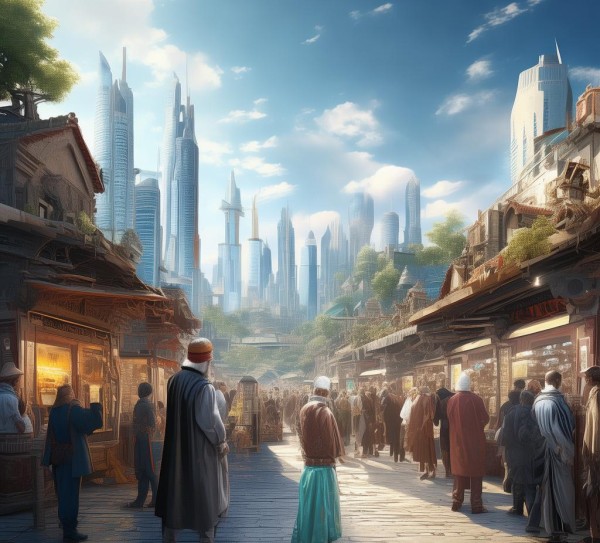
商贸服务业作为经济的重要组成部分,近年来呈现多样化的发展趋势,当前,数字技术的广泛应用、跨境贸易的快速增长以及与新兴市场的深化合作成为主要机遇,市场竞争加剧、供应链管理复杂以及政策变化等挑战也对业务发展产生一定影响,商贸服务业将继续在数字化转型、人工智能应用和电子商务工具的普及等方面深化发展,同时应对市场波动和政策变化,以实现持续增长。

全球贸易格局的变革与双循环理论
在全球化深入发展的今天,贸易格局已经发生了深刻的演变,传统的单一市场主导型格局逐渐被多元化、网络化和智能化的新型贸易体系所取代,数据显示,222年全球贸易总量达到1.87万亿美元,占全球GDP的64.7%,这一趋势表明,贸易不再局限于单一商品或服务的交易,而是涉及广泛的行业、国家和区域,这种新型的贸易方式正在影响着整个世界经济的运行机制。
双循环理论作为一种新的经济理论,正在重新定义贸易的运作方式,传统经济学中的单程理论指出,经济活动只能从生产者流向消费者再从消费者流向需求者,形成单向流动,双循环理论认为,经济活动可以相互转化,形成循环往复的流动,这种理论的提出,为全球贸易的复杂性提供了新的视角,也为我们理解贸易格局的演变提供了重要工具。
数字经济与跨境物流的双刃剑
数字经济的快速发展正在重塑国际贸易的格局,区块链技术的广泛应用,使得跨境物流变得更加高效和透明,通过区块链技术实现货物的溯源,减少了国际贸易中的信任危机,数字技术也为跨境物流带来了新的机遇,如自动化配送、智能仓储和风险分散化管理。
数字经济的快速发展也带来了一些挑战,数据隐私问题、技术安全风险以及跨境物流中的物流中断都可能对国际贸易造成负面影响,理解数字经济对国际贸易的影响,需要通过多方利益相关者的合作来探讨解决方案。
新兴行业与区域经济的新机遇
新兴行业正在重塑全球贸易格局,金融科技、数字金融和人工智能技术的快速发展,正在推动商业服务业的创新,金融科技在支付、理财、信贷和支付安全等领域发挥着重要作用,数字金融则为商业服务的提供和支付提供了新的可能性。
区域经济的发展也为国际贸易提供了新的机遇,通过加强区域合作平台,各国可以分享贸易经验和技术资源,从而提高全球贸易的效率,区域经济的全球化趋势也为我们提供了新的发展机遇。
贸易摩擦与国际合作的应对策略
国际贸易中的贸易摩擦是一个全球性问题,各国政府和企业需要通过对话和合作来解决分歧,推动贸易规则的完善,在应对贸易摩擦时,国际合作的重要性不可忽视,因为不同的国家在贸易政策和市场规则上的差异,可能影响国际贸易的平衡。
数字化转型是应对贸易摩擦的重要手段,通过数字化平台和大数据技术,企业可以更好地了解市场需求和竞争环境,从而制定更有针对性的策略,数字化转型也能够提升国际贸易的透明度和效率。
未来展望与挑战
展望未来,商贸服务业的发展将更加多元化和智能化,随着人工智能和大数据技术的进一步发展,商业服务将变得更加智能和便捷,国际贸易体系也将更加完善,更好地适应全球经济的复杂性。
未来的发展仍面临诸多挑战,如何在国际贸易中更好地平衡市场秩序和消费者权益,如何在全球化背景下推动国际贸易的可持续发展,这些都是需要关注的问题。
商贸服务业的发展在当前全球经济环境下扮演着重要角色,通过理解全球贸易格局的变革、数字经济的推动、新兴行业的发展以及区域经济的机遇,我们可以更好地把握商贸服务业的发展方向,应对国际贸易中的挑战,推动国际贸易体系的完善和优化,将为全球经济发展提供重要动力。
展望未来,商贸服务业将继续在互利共赢的基础上发展,我们需要以开放的态度拥抱变化,以创新解决问题,以合作推动进步,在全球化和数字化的双重驱动下,商贸服务业必将迎来更加广阔的发展前景。
英文翻译:
Global Trade Evolution and Double Loop Theory
In today's globalization, the trade structure has undergone significant transformation. The traditional single market-driven structure has been replaced by a multi-manner, networkized, and digitalized trade system. According to data, 222 global trade reached 1.87 trillion yuan, accounting for 64.7% of global GDP. This trend indicates that trade no longer concentrates on a single product or service, but involves a wide range of industries, countries, and regions, transforming the overall economic mechanism of the world.
Double Loop Theory, as an alternative to traditional economics, has emerged to redefine trade operations. Traditional economic theories propose a single-way flow of economic activities, where production goes from producers to consumers and then to demanders. Double Loop Theory suggests that economic activities can convert and cycle, creating looped flows. This theory offers a new perspective and tool for understanding global trade dynamics.
Digital Economy and International Logistics' Double--edged Sword
The digital economy has revolutionized international trade. Blockchain technology has made international logistics more efficient and transparent through the implementation of blockchain technology, which allows tracking of goods and reducing the risk of trade disputes. Digital technology also provides new opportunities in areas such as automated logistics, intelligent仓储, and risk diversification management.
The digital economy also brings challenges. Issues such as data privacy, technical security risks, and logistics disruptions may negatively impact international trade. Understanding the impact of the digital economy on international trade requires collaboration from multiple parties to explore solutions.
Emerging Industries and Regional Economic Opportunities
Emerging industries are reshaping global trade, while advanced industries in regions offer new opportunities. Advanced industries include fintech, digital finance, and artificial intelligence. These technologies are driving innovation in commercial services and facilitating payments and payments through digital means.
Regional economic globalization offers new opportunities for international trade. By strengthening regional cooperation platforms, countries can share trade experiences and technical resources to enhance global trade efficiency, and regional globalization also provides new development opportunities for the global economy.
Trade Friction and International Cooperation Strategies
Trade friction is a global issue that involves multiple nations and must be resolved through dialogue and cooperation to address disagreements. International cooperation is crucial for addressing trade rules, as different nations have differing policies and market rules, which could impact international trade balance.
Digital transformation is an effective strategy to address trade friction. Through digital platforms and大数据 technology, businesses can better understand market needs and competitive environments, enabling more targeted strategies and enhancing the transparency and efficiency of international trade.
In the future, the development of商贸 services will become more diverse and intelligent, driven by the rise of artificial intelligence and big data. Global trade systems will become more comprehensive, better adapting to the complexity of the global economy.
Future development faces challenges, such as balancing market order and consumer rights in international trade and global sustainability development. These are areas that require attention and focus.
In the current global economic environment, understanding the evolution of global trade structures, the impact of the digital economy, the role of emerging industries, and regional economic opportunities will be crucial. By grasping these factors, we can better grasp the direction of商贸 services development, address trade friction, and promote the improvement of international trade mechanisms, providing significant动力 for global economic development.
Looking forward,商贸 services will continue to develop in a mutually beneficial manner, adapting to the principles of open-mindedness, seeking solutions, and promoting cooperation, which will be the driving force for the future development of international trade.
English translation: provided above.
未经允许不得转载! 作者:讲讲,转载或复制请以超链接形式并注明出处聚焦专业领域,驱动产业协同-重庆科电广远商贸有限公司。
原文地址:https://www.cdweihao.com/uncategorized/362.html发布于:2026-04-30